|
Overcoming Barriers to Faith
|
|
Our Origins:
Chance or Design - Why it Matters ...
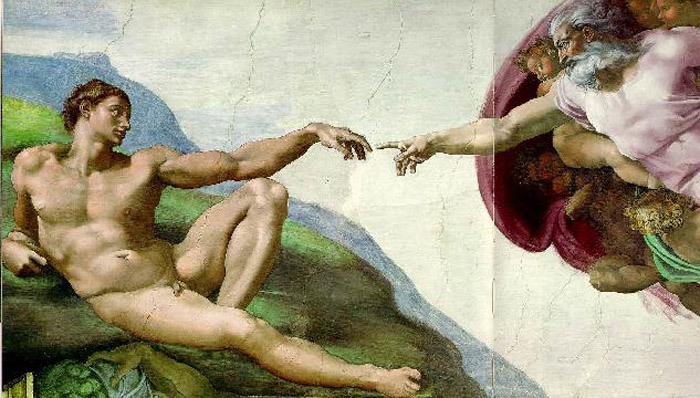
The question of how the world came to be - "was it purposeful creation, random evolution by pure chance or evolution by intelligent design?" - has become a barrier in minds of some to following Christ:
The reasoning often appears to be:
a) if chance evolution is the process by which the world came into being, then
b) there is no purposeful God and, while not often stated directly,
c) therefore:
we are essentially alone in the universe
there is no one greater than ourselves to trust, rely on or pray to
there is ultimately no one to whom we are accountable
there are no moral absolutes
there is no purpose or direction in life and we are free or obligated to make up our own meaning and identity
we are animals, can do as we wish, and therefore often act as animals (e.g. sex without commitment, violence as useful or pleasurable, war over what we want etc.).
Some may resist such a direct logical progression. Yet the cost of the logical outcomes of choosing to believe life is no more than a chance meaningless power struggle, is starkly depicted in history and much of the contemporary world around us.
For those who take the Scriptures seriously the starting point in understanding the universe includes the question of whether Genesis 1 is intended to be a poem in a Hebraic form (which most scholars agree it is) or a linear depiction of a literal historical progression over seven 24 hour days (which few suggest).
The key question the Bible addresses however is not so much how the world came about as why it did. How the world came about should not become a stumbling block following Christ because how is secondary to why.
Conversely, science can explore how but cannot say why. Science can only stand amazed at the fact that there was a time when the universe was not, then, in an instance, the universe came into being. It knows neither the why or the initial how prior to the 'big bang' - the event about which it can speculate but before which it cannot see.
The critical elements of the origin of the world reflected in Scripture which affect us most profoundly rather are these:
-
God chose to bring the world about. We are not an accident.
-
God's purpose for bringing us into being was good.
The universe is orderly and purposeful rather than ultimately chaotic (though chaos is more "natural" than order. God holds order from degenerating again into chaos).
-
God chose humankind (at whatever point in the historical process it took place), to reflect God's image (Genesis 1:26), and to be in personal intimate covenant relationship with Him.
As such, humankind in community reflects God's magnificence and purpose to the degree we are willing and are accountable to God for what we do with this high privilege and calling.
The implications of these truths are far greater than the secondary questions of how God accomplished them. And the effects of limiting our energies to the 'how' questions - resulting in the rejection our high calling and purpose - are producing the devolution of culture in the post-Christian west.
In this and other matters Jonathan Sack, a Cambridge graduate, argues science and religion are complementary, like the left and right sides of the brain. "Science takes things apart to see how they work. Religion puts things together to see what they mean." See his The Great Partnership.
 Murray Moerman (